
Undead Siege: Tower Defense
WhitedotStrategy
4.8266.00 Reviews
- Version
- 1.14.7
- Installs
- 1.00M
- Age Rating
- Teen
Screenshots
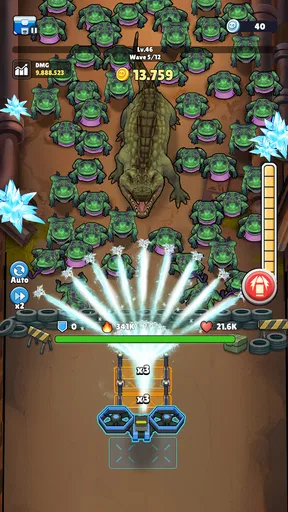
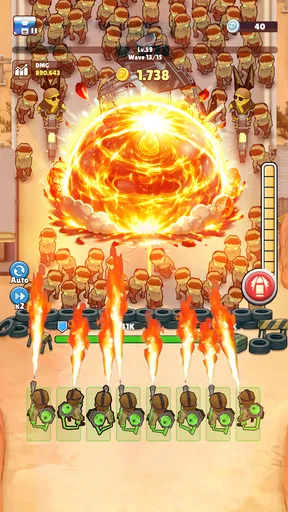
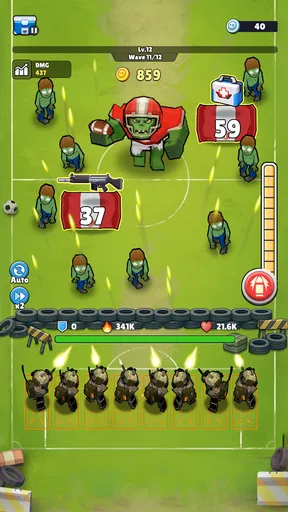
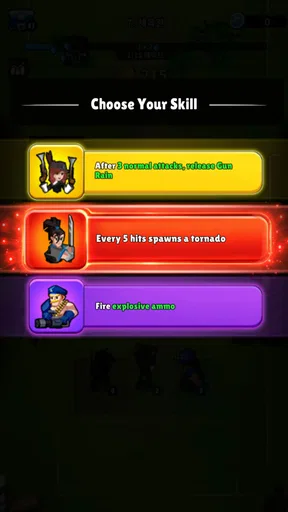
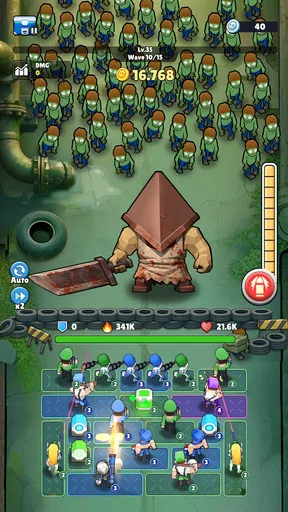
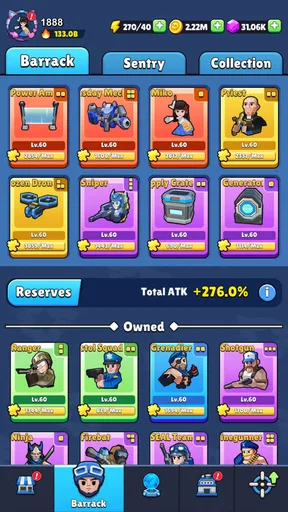
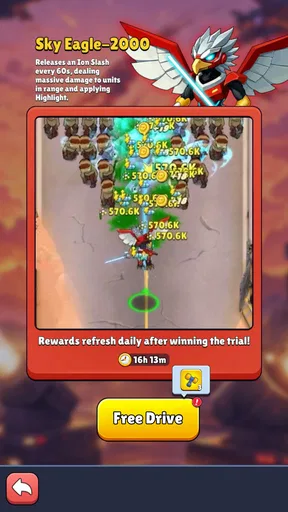
Our Review of Undead Siege: Tower Defense
 Analysis by Appyee
Undead Siege: Tower Defense is the kind of strategy game I can open for a short break and still find myself planning several moves ahead. Its central idea combines merging, arranging a backpack, preparing a fighting setup, and pushing through an undead assault. That mix gives each run more decisions than a simple lane-defense game, because the way I organize what I have matters almost as much as the units themselves.
I reviewed it as a free game from Whitedot, and my first impression was that it aims for quick sessions without removing the tactical layer. The store summary describes the loop as merging, organizing, backpacking, fighting, and conquering, but the important part is how those actions connect. I am not only watching enemies approach; I am constantly deciding what deserves space, what should be combined, and whether a stronger immediate option is worth giving up future flexibility.
The game sits in the strategy category and carries a Teen content rating. It is available for devices running Android 7.0 or later. That broad compatibility makes it accessible to many players, while the free entry point makes trying the opening experience easy. The current version is 1.14.7, and the game has reached over a million installs with a strong average rating of 4.8 from around twenty-two thousand ratings.
How the current version feels to play
I find the current version’s main appeal in how a small change to the backpack can reshape the next fight, so I’d focus this section on building a repeatable pre-battle check rather than chasing a supposedly perfect setup. I’ll also look at which settings are worth reviewing before settling into a routine, since a comfortable pace makes it easier to judge each result fairly.
A compact loop with more planning than it first suggests
The basic rhythm is easy to understand: prepare your resources, arrange them, merge where useful, and send the result into combat against undead enemies. What makes the loop work is that these actions are not isolated menus. A decision made during organization affects the battle that follows, and a decision made during merging can change how much room I have for other tools.
I found the backpack element especially important. In many tower-defense games, preparation is mostly about choosing a position on a map. Here, the arrangement itself becomes part of the puzzle. A crowded or poorly planned inventory can leave me with useful objects that I cannot deploy efficiently. I learned to resist filling every available space immediately, because keeping room for a later combination can be more valuable than taking a small upgrade at once.
That is one of the game’s more interesting trade-offs: a larger-looking collection is not automatically a better one. I often had to choose between holding several separate pieces for flexibility and merging them into a more powerful result. The right answer depends on how close the next fight is and whether my current setup already covers its most urgent weakness.
Why merging is more than a simple upgrade button
Merging gives the game a satisfying sense of progress, but I did not treat it as an automatic action. Combining items or units can improve immediate strength, yet it may also reduce the number of independent positions I can use. When enemies arrive from different directions or when my formation needs several functions at once, one large improvement may be less useful than multiple smaller options.
My practical rule became simple: merge aggressively when my board is cramped or when a battle is about to overwhelm the weakest part of the setup; merge cautiously when I still have open space and no clear pressure point. This approach made the game feel less like matching objects and more like managing a limited tactical budget.
Players who enjoy optimizing layouts will probably get more from this system than players who only want to tap through upgrades. The satisfying moments come from recognizing why a battle went badly, changing the arrangement, and seeing that one adjustment create a better result. It is not a difficult strategy game in the traditional grand-scale sense, but it rewards attention to small decisions.
The backpack is a tactical screen, not just storage
The backpack deserves separate attention because it changes how I think between battles. I started using it in three stages. First, I kept the items that supported my main plan. Second, I left open space instead of treating every empty slot as wasted potential. Third, I checked whether a new piece improved the whole arrangement or merely looked stronger in isolation.
This workflow helped prevent a common mistake: building a powerful cluster that leaves no room to respond. A setup can be impressive on paper and still feel awkward when it cannot accommodate the next useful combination. For a new player, I recommend taking a moment before each fight to ask which part of the layout is doing real work and which part is only occupying space.
The system also creates a useful difference between “strong now” and “ready for later.” If I merge too early, I may gain a better combat option but lose the flexibility needed for the next encounter. If I hold everything back, I can become too weak in the present. That tension is where the game’s strategy lives.
Combat rewards preparation more than frantic input
Once a fight begins, the preparation phase carries much of the responsibility. I did not experience the game as a test of rapid tapping. The more meaningful choices happened before combat, when I decided how to spend room, how to combine available pieces, and which weakness to address first.
This makes Undead Siege: Tower Defense suitable for players who like thinking through a setup but do not necessarily want a long, complicated strategy campaign. A short session can still have a clear arc: inspect the situation, make a risky adjustment, watch the result, and revise the plan. That structure works well on a phone because each attempt feels contained rather than demanding a large uninterrupted block of time.
The downside is that players looking for constant action may find the preparation-heavy rhythm slower than expected. The game’s appeal is not simply watching waves collapse. It is understanding why the arrangement succeeded or failed. If that kind of reflection sounds tedious, a faster arcade defense game may be a better fit.
What the current release tells me about its evolution
The current version, 1.14.7, suggests a product that has moved beyond its earliest launch state rather than remaining at a first-build starting point. The game was released on September 20, 2024, and the version now available is the one I would judge as the practical experience for a new player. I would not assume that every later change transforms the core loop, but the version number does make it reasonable to approach the game as an actively developed title rather than a one-off experiment.
For existing players, that distinction matters. A mature version can feel more settled in its basic flow, while still leaving room for balance adjustments or refinements. I would pay attention to how future updates affect the relationship between merging and storage space, because small changes there could alter the best strategies without changing the game’s overall identity.
Who will enjoy it most
I would recommend it to people who like mobile strategy games built around compact choices. It is particularly appealing if you enjoy arranging a limited inventory, comparing several imperfect options, and learning from a failed attempt instead of simply restarting without reflection.
It also suits players who want a free game they can sample without committing to a purchase at the beginning. The game contains in-app purchases ranging from $0.49 to $99.99 per item, so I would approach the store carefully and decide in advance whether I want to spend anything. The free entry is helpful, but the presence of optional purchases means the most comfortable experience depends partly on how disciplined I am with upgrade temptations.
I would be more cautious recommending it to someone who dislikes inventory management. The backpack is not a side detail that can be ignored; it is central to how the game asks me to think. Likewise, anyone seeking a story-driven adventure, a competitive multiplayer focus, or a purely passive tower-defense experience may find the design pointed in the wrong direction.
A realistic everyday session
Imagine I have ten minutes while waiting for an appointment. I can start by checking the current arrangement instead of entering a battle immediately. I notice that one area is crowded, while another lacks a useful response. I merge two compatible pieces, keep one slot open, and use the remaining room to preserve a separate option. The next fight then becomes a quick test of that decision.
If the setup works, I learn which relationship between space and strength made the difference. If it fails, I have a specific adjustment to try rather than a vague feeling that the game was unfair. That makes the short session feel productive even when I do not progress as far as I hoped.
For longer play, I would take breaks after a few attempts. Repeating the same arrangement while frustrated is unlikely to help, because the game rewards noticing a structural problem. A short pause often makes it easier to see whether I am merging too soon, keeping weak pieces for sentimental reasons, or leaving the wrong kind of space in the backpack.
How it compares with familiar alternatives
Compared with a traditional tower-defense game, this title places more emphasis on preparation and collection arrangement. In a conventional alternative, I might focus mainly on tower placement, upgrade timing, and enemy paths. Here, the tactical question begins earlier: what should occupy my limited space, and how should those pieces be combined before the fight starts?
Compared with a merge-focused casual game, it gives merging a more direct strategic consequence. The goal is not only to create a higher-level object and enjoy the visual reward. The result has to fit into a combat plan, and the space consumed by that result can matter. That makes the decisions more demanding than a relaxed matching loop.
Compared with a large strategy game, it is much easier to pick up and play. I do not need to study a broad world map or remember a long list of systems before making a useful decision. The trade-off is depth: its challenge comes from compact arrangement puzzles rather than diplomacy, economy, or expansive long-term planning.
Where the friction remains
The same systems that make the game distinctive can also create frustration. A poor arrangement may feel costly because it affects several actions at once. If I use space inefficiently, I can limit my merging choices, weaken the next battle, and then have fewer options for recovery. That chain reaction is strategically interesting, but it can feel harsh during the learning period.
There is also a natural risk of repetition. The core loop asks me to arrange, merge, fight, and adjust, so players who need constant mechanical variety may eventually want more than this structure provides. I would not choose it as my only mobile game if I knew I quickly tire of optimizing similar decision patterns.
The purchase range is another point to keep in mind. A free game with optional items can be perfectly enjoyable without spending, but I still recommend checking every purchase prompt before confirming it. Players who prefer a single upfront price and no store decisions may feel more comfortable with a premium strategy title instead.
Three habits that improved my results
I stopped treating every empty backpack slot as a problem. Open space is useful when it preserves the ability to react, especially after a battle changes what I need next.
I separated emergency merges from planned merges. If the current setup is about to fail, immediate strength matters; if I am safe, holding compatible pieces can preserve more options.
I reviewed the arrangement after a loss before changing everything. Replacing the entire setup hides the cause of failure, while changing one crowded area at a time makes the lesson clearer.
These habits are not flashy features, but they are the difference between playing by impulse and playing with a repeatable method. They also make the game friendlier to newcomers, because improvement comes from a manageable checklist rather than from memorizing an unexplained optimal solution.
What existing users and new players should watch
New players should watch how quickly they fill the backpack and how often they merge without a clear reason. Those two habits can make the game feel more restrictive than it really is. I would spend the early sessions learning the relationship between space and combat instead of chasing the biggest-looking combination.
Existing users should watch the balance between immediate power and future flexibility as the current version continues to define the experience. Any adjustment to merging values, storage behavior, or combat pressure could change which layouts feel efficient. I would judge such changes by whether they create more meaningful choices, not simply by whether they make progress faster.
It is also worth watching how the game feels over time. Its strong rating and broad install base show that many players connect with the formula, but popularity does not remove the personal question of repetition. If the preparation loop still makes you curious after several sessions, it has lasting value. If arranging the same kind of resources starts to feel like homework, the game has probably reached its limit for you.
My recommendation
My overall view is positive. Undead Siege: Tower Defense takes a familiar undead-defense setting and gives it a specific identity through the connection between merging, backpack organization, and combat preparation. I like that the best move is not always the largest upgrade, and I appreciate that a failed attempt can usually point toward a practical change.
I would recommend it to strategy fans who enjoy short sessions, limited-space puzzles, and gradual improvement through experimentation. I would skip it if I wanted a story-heavy game, nonstop action, or a completely purchase-free experience. For everyone else, the free download makes it easy to test whether the arrangement-focused loop clicks.
Whitedot has built a game whose current appeal comes from small decisions carrying real weight. My strongest advice is to leave room, merge with a purpose, and treat each battle as feedback rather than a simple win-or-lose screen. The smartest setup is often the one that preserves your next decision. That is what keeps this strategy game more engaging than its short store summary first suggests.
Verdict
Strengths of Undead Siege: Tower Defense
- Easy-to-learn tower defense mechanics for quick, casual sessions.
- Zombie waves create steady tension and encourage strategic planning.
- Multiple towers offer useful options for adapting to different enemy types.
- Upgrade choices add progression and make repeated battles feel rewarding.
- The undead theme gives the game a clear and entertaining visual identity.
Limitations of Undead Siege: Tower Defense
- Later stages can become difficult without careful resource management.
- Some upgrades may require considerable grinding to unlock.
- Enemy waves can feel repetitive after extended play sessions.
- Small screen controls may feel crowded on certain phones.
- Progress may feel slower for players who avoid optional purchases.
Similar Picks in This Category
View All
Clash of Clans
Supercell4.5

Plants vs. Zombies™
ELECTRONIC ARTS3.7

Lords Mobile: Kingdom Wars
IGG.COM4.5

Clash Royale
Supercell4.4

State.io — Conquer the World
CASUAL AZUR GAMES4.1

Car Driving School : Car Games
Spark Game Studios3.9
Frequently Asked Questions
What kind of game is Undead Siege: Tower Defense?
Undead Siege: Tower Defense is a strategy game focused on defending your base against continuous waves of zombies and other undead enemies. You place defensive units, improve their abilities, and choose the best positions to stop attackers before they reach your stronghold. The game combines classic tower-defense mechanics with progression, increasingly difficult stages, and tactical decisions that become more important as enemy types and wave patterns change.
Is Undead Siege: Tower Defense free to download and play?
The game can generally be downloaded and started without paying, but players should check the current store listing for the exact availability and purchase options on their device. Like many free-to-play tower-defense games, it may include optional in-app purchases, such as currency, upgrades, bundles, or other advantages. You can usually make progress without spending money, although patience and repeated attempts may be needed on harder levels.
Does the game require an internet connection?
Internet requirements can vary depending on the version and the features being used. Basic campaign gameplay may work in offline situations, but online access could be necessary for advertisements, cloud saving, events, rewards, updates, or purchases. Before relying on it during travel, it is best to test the game with mobile data and Wi-Fi disabled. Also remember that removing the app or changing devices may affect locally stored progress.
Is Undead Siege: Tower Defense suitable for beginners?
The game is approachable for players who are new to tower-defense games because its core objective is easy to understand: build defenses, stop enemy waves, and upgrade your strategy. However, later missions can become demanding, especially when enemies have different strengths or when resources are limited. Beginners should experiment with unit placement, avoid spending upgrades too quickly, and replay earlier stages to understand which defenses work best.
What should I know about performance, ads, and in-app purchases before downloading?
Performance may depend on your phone or tablet, particularly during large enemy waves or when several visual effects appear at the same time. Older devices may experience slower loading, heat, or reduced battery life. The game may also display optional or required advertisements and offer in-app purchases. Review the store description, permissions, age rating, and recent user feedback before downloading, especially if the device is used by children or has limited storage.
Play our best games!


